Chapter 3: Problem of the Century: a vicious cycle of feeding and keeping wildlife
As LPP continues to grow, I’ve had the opportunity to dive deeper into the study of less favourable long-tailed macaques which I had long heard about. Known for their bold and aggressive behaviour — I’d say they bring a little drama, it’s easy to label them as a nuisance. However, after months of observing them, I’ve come to realise the issue is far more complex than it seems at first glance.
Most people, including myself, initially hold a negative impression of macaques. But as I spent more time in the field, watching their interactions, I began to uncover the deeper reasons behind their behaviour. In areas where they have depended on human food for years, the problem is glaring.
Picture this: a car slows down, and a bag of food scraps is tossed out from the window. In seconds, the macaques scramble towards it. The alpha male asserted his dominance over the spoils while the others darted around, waiting for their chance. A dispute breaks out, and amidst the chaos, a few macaques are shoved into the path of oncoming cars. The driver swerves, narrowly avoiding tragedy, but the macaques are not always so lucky. This is the scene we witness time and again — macaques scrambling for food they’ve come to expect from humans.
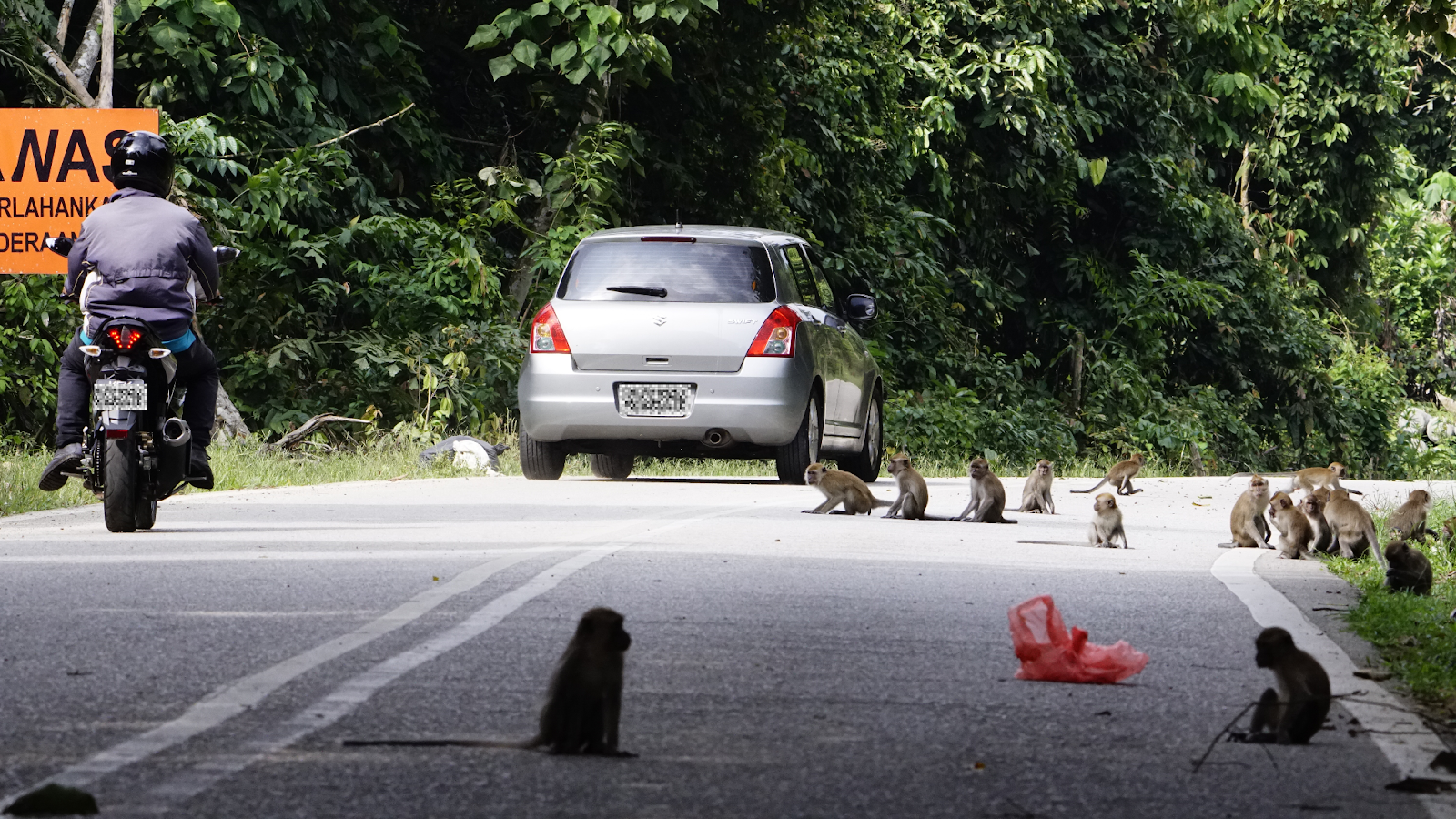
Macaque groups, accustomed to being fed, have lost their ability to forage and are often overcrowded in the middle of the road for human food. (Photo credit: Jo Leen)
As macaques lose their natural foraging instincts, they begin to associate humans with easy meals. Over time, they grow bolder, sometimes aggressive, demanding food. They become comfortable approaching people, even when they shouldn’t. The dependency sets the stage for human-wildlife conflict. People grow frustrated, tension rises, and when an incident occurs, the blame falls entirely on the monkeys. Being labelled “aggressive monkey” reinforces people’s negative stereotypes. However, what many fail to realise is that their behaviour is a direct result of human actions — our constant interference.

A feeder is giving the monkeys with leftover pastries, reasoning that If they aren’t fed, what are they going to eat? (Photo credit: Yi Min)
The act of feeding may seem harmless at first, but what we don’t see are the monkeys who vomit from eating the wrong food or the ones with bloated stomachs from consuming human-sourced garbage. Over the past year, we documented nearly 130 feeders and spoke to several of them. Perhaps people feed monkeys out of a misplaced sense of kindness, or maybe they enjoy a brief connection with a wild creature. Yet, the truth is, that feeding action perpetuates a risky dependency that can ultimately lead to their suffering harm—or even death. Do you still think roadkill, poor waste management, and potential disease transmission risk are something worth that fleeting moment of connection?
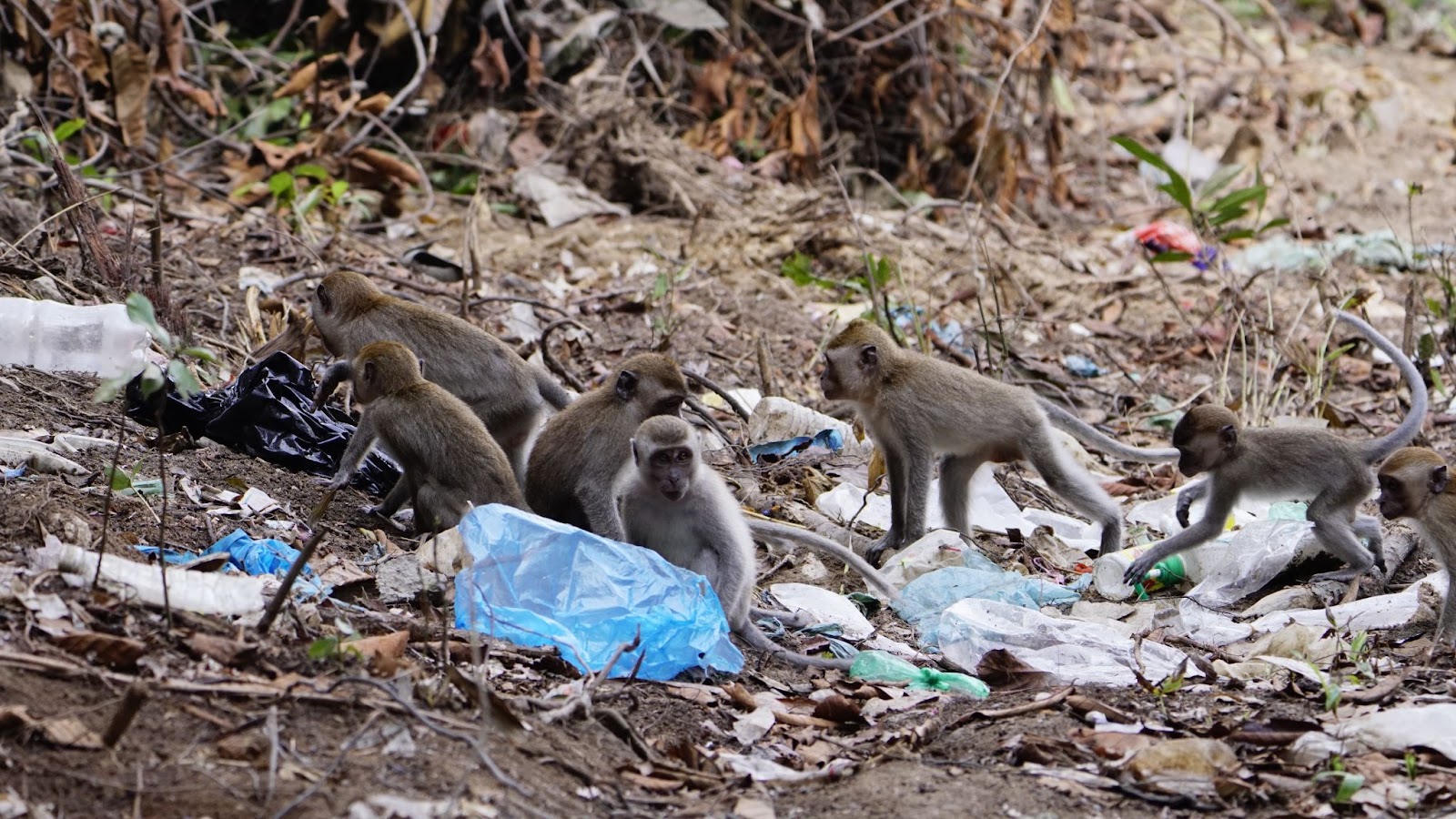
Macaques are foraging through the garbage that humans discard in their habitat. (Photo credit: Jo Leen)
As the human footprint expands and more macaques come in contact with people, the misunderstandings and accidents only multiply. We’re left asking the same questions: How can we stop this? Why does this cycle continue? What’s the intention and motivation behind feeding monkeys despite the risks? The more we engage in this macaque’s work, the more questions arise, with every answer comes new challenges. I began to question why we, as humans, don’t see our role in creating these problems. Their behaviour is a reflection of the environments we create for them.
If we want to see change, we must first understand the role we play in shaping their behaviour and how we choose to live alongside the natural world. How many of us, as children, were taught that monkeys don’t just eat bananas? How do you behave when encountering wildlife? How do I interpret macaques’ body language and expressions? At LPP, I’ve seen firsthand the importance of equipping ourselves with the right knowledge. People are generally afraid of what we don’t understand. We believe that by planting the right seeds, we’re able to cultivate a more informed and compassionate community for the future.
Read Joey’s ‘From Monkeys to Mindsets: A Growth-filled Life Chapter with Langur Project Penang’ – Chapter 4 here
 Langur Project Penang (LPP)
One Comment Add yours