Someone once asked me, “Do you know about dusky langurs? You’re from Penang, and you don’t know about them?” I had no idea how much this question would change my life. By chance, I discovered and stumbled upon Langur Project Penang (LPP), where I embarked on a journey exceeding anything I expected.
Chapter 1: Seeing the World Through Langur’s Lens
I am a nature and outdoor enthusiast. My first experience observing dusky langurs with Jo Leen in the forest was eye-opening. I never imagined that I would stay for nearly two years, immersed in learning beyond the behaviour and ecology of these fascinating creatures. My time at LPP has been an adventure in itself, and even after countless hours in the field, nature always finds ways to surprise me until today.

One of my favourite fieldwork photos taken by Jo Leen.
By observing the langurs, I learnt how much their lives mirror our own: food and habitat, companionship and love, communication and emotion. These elements reminded me that humans and wildlife share more similarities than we realise. I’ve learnt about the beauty and simplicity of life, and it’s a lesson I carry with me every day.
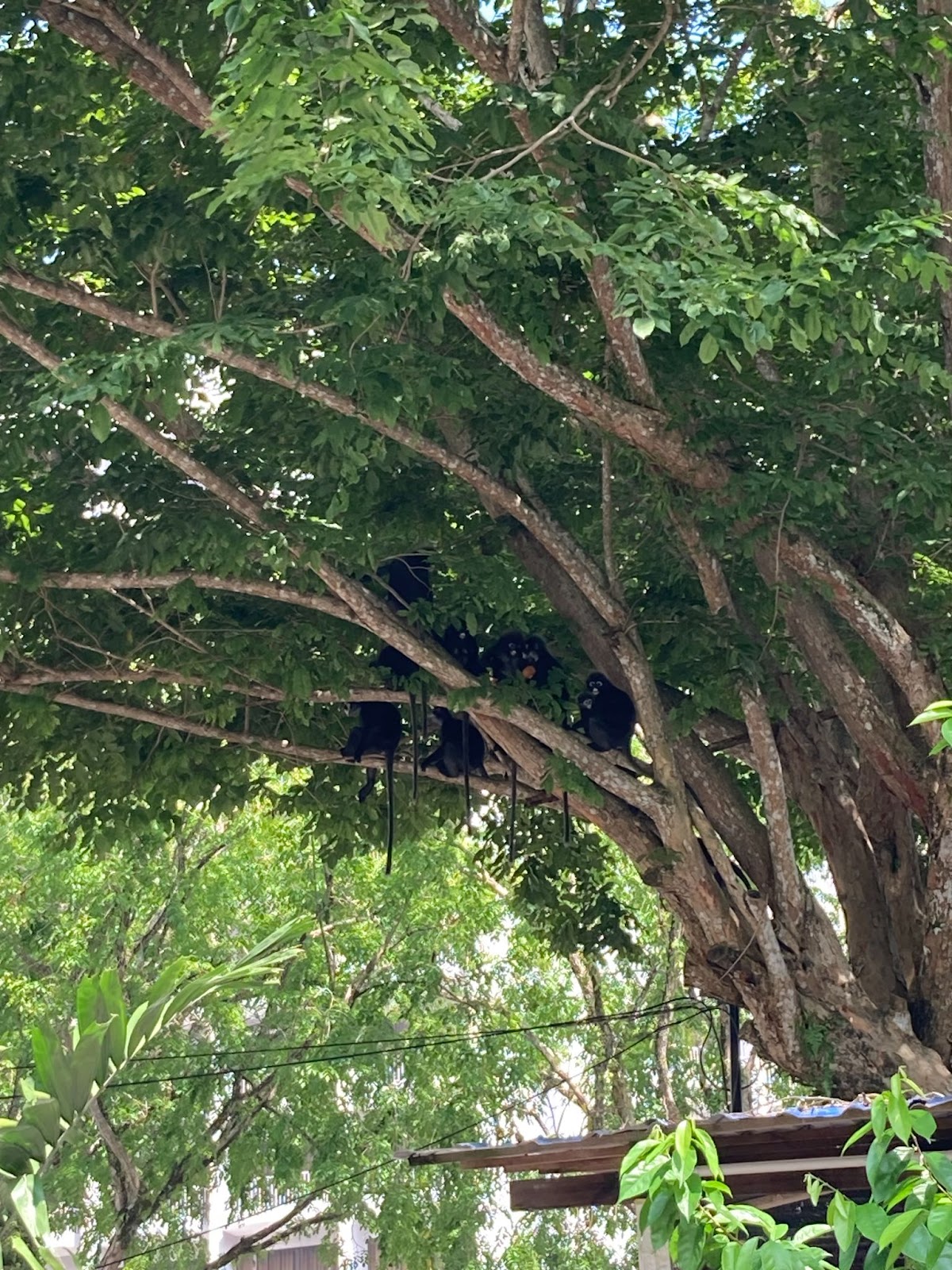

Photo on the above: A lovely dusky leaf monkey family
Photo on the bottom: The mother, Puteri is grooming her baby son, Numi
But nature, like life, isn’t always kind. One of the most memorable moments that sticks out is the first time I witnessed infanticide (the killing of own infant). It was heartbreaking, yet it revealed the raw reality of nature’s survival mechanisms, teaching me that the balance of survival is often misunderstood by us humans, living in our comfortable bubbles. While nature can be beautiful and awe-inspiring, it also has harsh and unforgiving aspects. Ecosystems are driven by survival, competition, and cycles of life and death. Nature operates on balance, and sometimes that balance comes with difficult realities. Nature doesn’t sugarcoat, and that experience grounded me, preparing me for the challenges ahead.
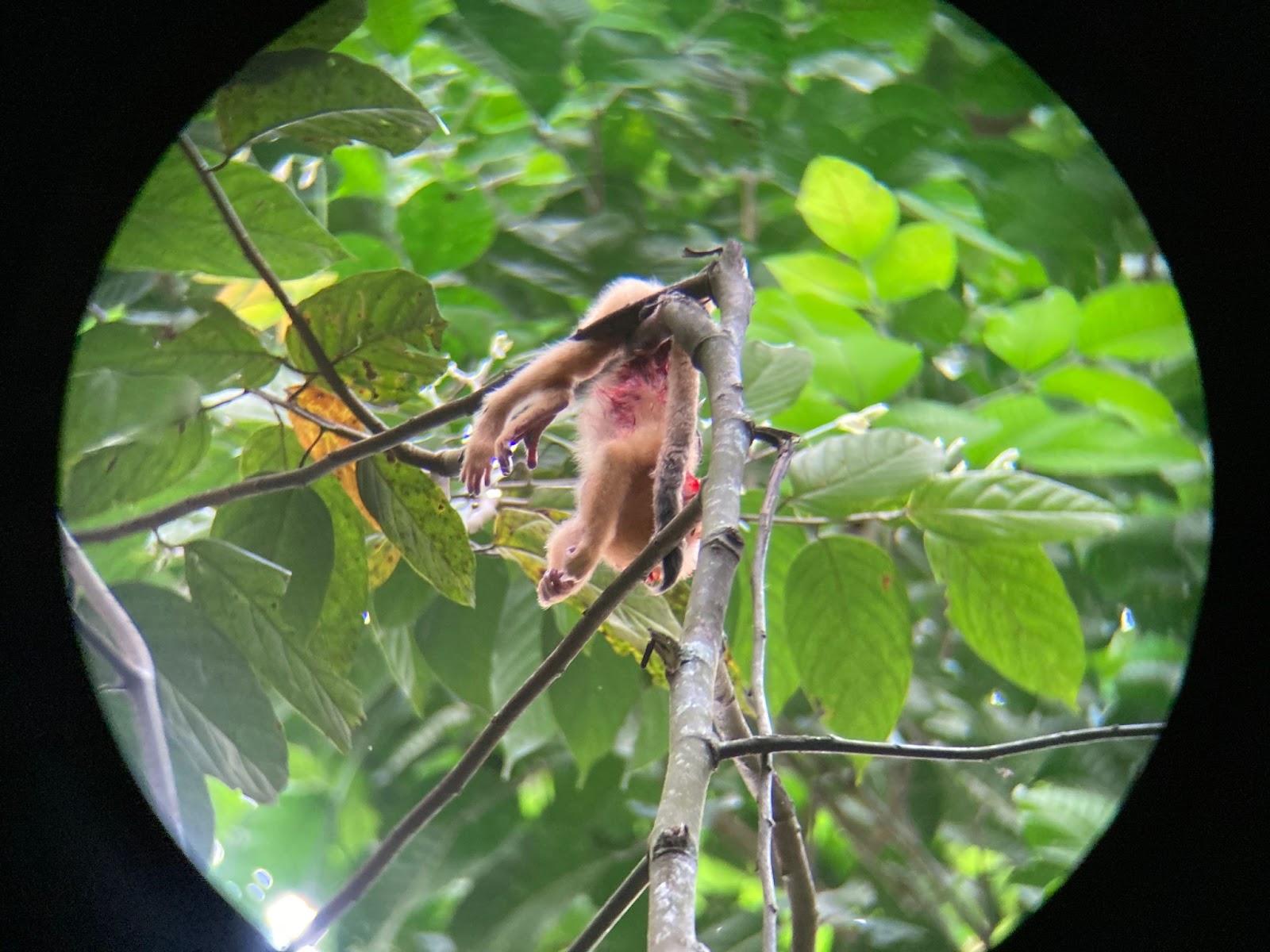
Infanticide, though tragic, is a behaviour observed in some wildlife species, often tied to complex social structures and competition among males.
Chapter 2: From Monkeys to People
After three months with LPP, I realised there was still so much left to discover, which prompted me to continue my journey. It took an unexpected turn when LPP began transitioning from studying langurs in the serene forest to following them through the bustling urban landscape—aa shift that opened up an entirely new world. In a flash, we weren’t just studying langurs; we were entering communities, talking to residents and stakeholders, stepping into the often chaotic intersection of conversation and conservation. We found ourselves grappling with the balance between humans and nature that we’re striving for. The real challenge wasn’t just understanding the langurs; it was confronting how people perceived them.

A resident is sharing her story about her experience with monkeys. (Photo credit: Hui Yi)
Every encounter brought its own challenges. My heart raced as I observed the langurs navigate in human settlements, hoping the curious young ones wouldn’t wander into someone’s opened window or door. With binoculars in hand, I found myself on the outskirts of neighbourhoods, eavesdropping on residents’ small talk about langurs — some expressed frustration, others fear and curiosity.
One day stands out vividly in my memory. As I followed our study troop of langurs as usual, I was enveloped by the sounds of urban chaos — rushing cars, residents’ scolding, distant BB gunshots, loud banging firecrackers set off to scare the langurs away. I felt displaced in that moment, like I was caught between two worlds – the green and the urban. It was an overwhelming reminder of how fragile the balance is when wildlife intertwines with human existence.

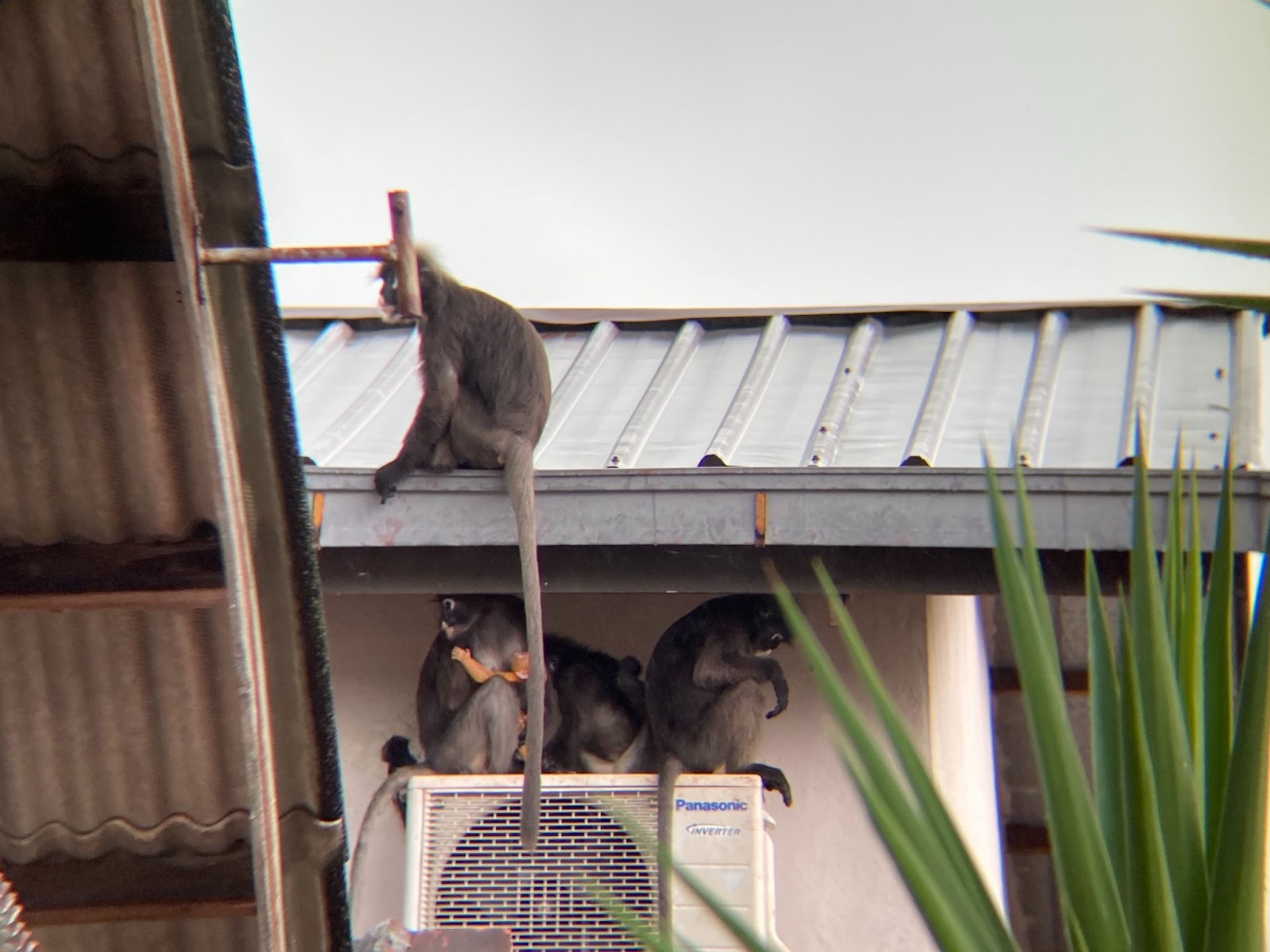
Photo on the above: The curious and playful juvenile female, Julie, is wandering and exploring the structures of the housing area.
Photo on the bottom: The dusky langur troop, Ah Tan’s family, huddled on the air conditioner condenser under the roof, using it as shelter from the heavy rain in their fragmented habitat.
I’ve had countless conversations with residents who see the langurs as a nuisance, while others find them fascinating. One question from a resident echoed in my head: “Why don’t you educate the monkeys instead of us?” To me, this question reflects a disconnect between how some people view wildlife as beings that need to be managed or tamed versus understanding wildlife do not have the capacity to be “educated” in the same way humans can. Wildlife acts primarily based on instinct, while humans are capable of reasoning, making decisions based on logic, and engaging in complex social and moral discussions. Other questions like “Would it be better if there were no trees?” “Can’t we just catch them?” “It’s useless to follow them every day.” revealed a lack of understanding about the complex dynamics of human-wildlife interactions. It was through these conversations that I realised how crucial perception is in conservation. It’s not just about the langurs; it’s about us — our perceptions, our fears, and our sense of responsibility toward the natural world.
It became clear at that moment we needed to approach conservation from a broader perspective, one that includes both wildlife and the stories of the people living alongside them. Take the scenario of a resident who spent a significant portion of his hard-earned money on repairing his roof after langurs had accidentally caused damage. His frustration was real and valid. It’s crucial that we step back and look at these situations from multiple perspectives before we rush to judgement or try to ‘educate’ others. Everyone has their own story, and it’s through understanding these stories that we can find real solutions.
What LPP did was delve into ethnography (a descriptive study of particular human society through interviews) and behavioural studies on urban langurs. Two key insights stood out: First, adult langurs moved with purpose, while juveniles and infants, full of energy, leaped across rooftops, playfully exploring their fragmented green space. It reminded me so much of watching children play, innocent and free-spirited. They weren’t destroying anything out of malice; they were simply navigating a world that we, as humans, had changed. Second, for most residents, their primary concern was the potential damage to their property.
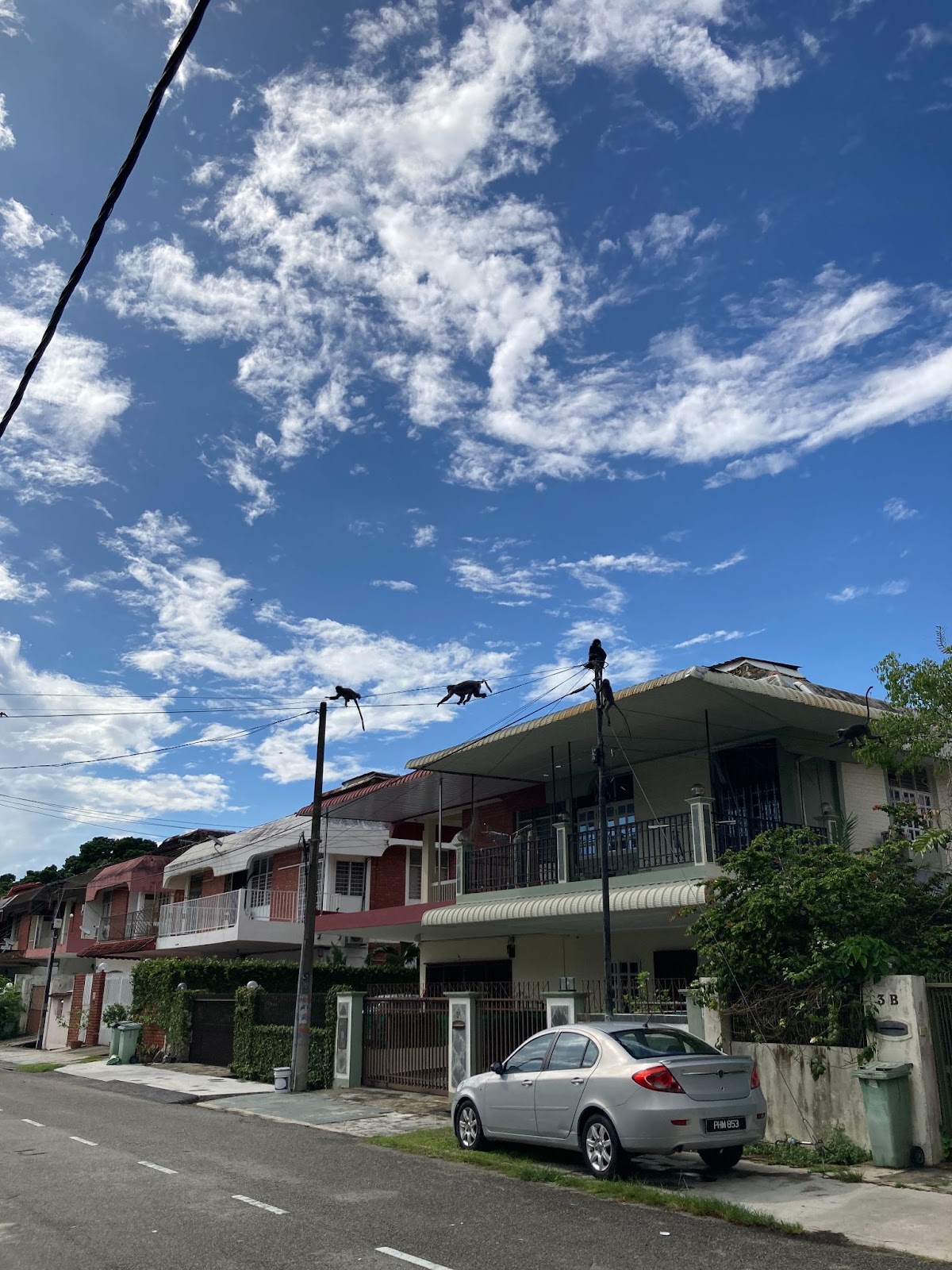
Ah Tan’s family has no choice but to use cable wires and rooftops as their pathways to travel between green spaces.
On the contrary, the real danger wasn’t their playful curiosity – it was when well-meaning people got too close, offering attention. What seemed like a harmless act of kindness could have devastating ripple effects, leading to habituation. These innocent interactions could teach the juveniles and infants that humans are safe, potentially setting them on a dangerous path of dependency, which can lead to negative human-wildlife interaction.
After a year of relentless effort, LPP installed the first road canopy bridge in the residential area to facilitate the movement of langurs within their fragmented home range. We saw the results of our work. The langurs, left to their instincts, knew what was best for them all along. Thanks to some cooperative residents embracing humane monkey guarding techniques and the installation of a canopy bridge, the langurs made a remarkable shift. They altered their travel routes, spending less time in residential areas and spending more time in the safety of buffer zones. Watching this transformation felt like a triumph. It wasn’t just about shifting the langurs’ behaviour. The victory was for everyone who had played a part. It was a reminder that conservation is never a solo endeavour. It’s a collective effort that requires people come together to care, to listen and to act.

The first road canopy bridge in the residential area named ‘Numi’s Crossing’ was installed in February 2024. (Read about the project here: https://langurprojectpenang.com/lets-bridge-to-coexist/)
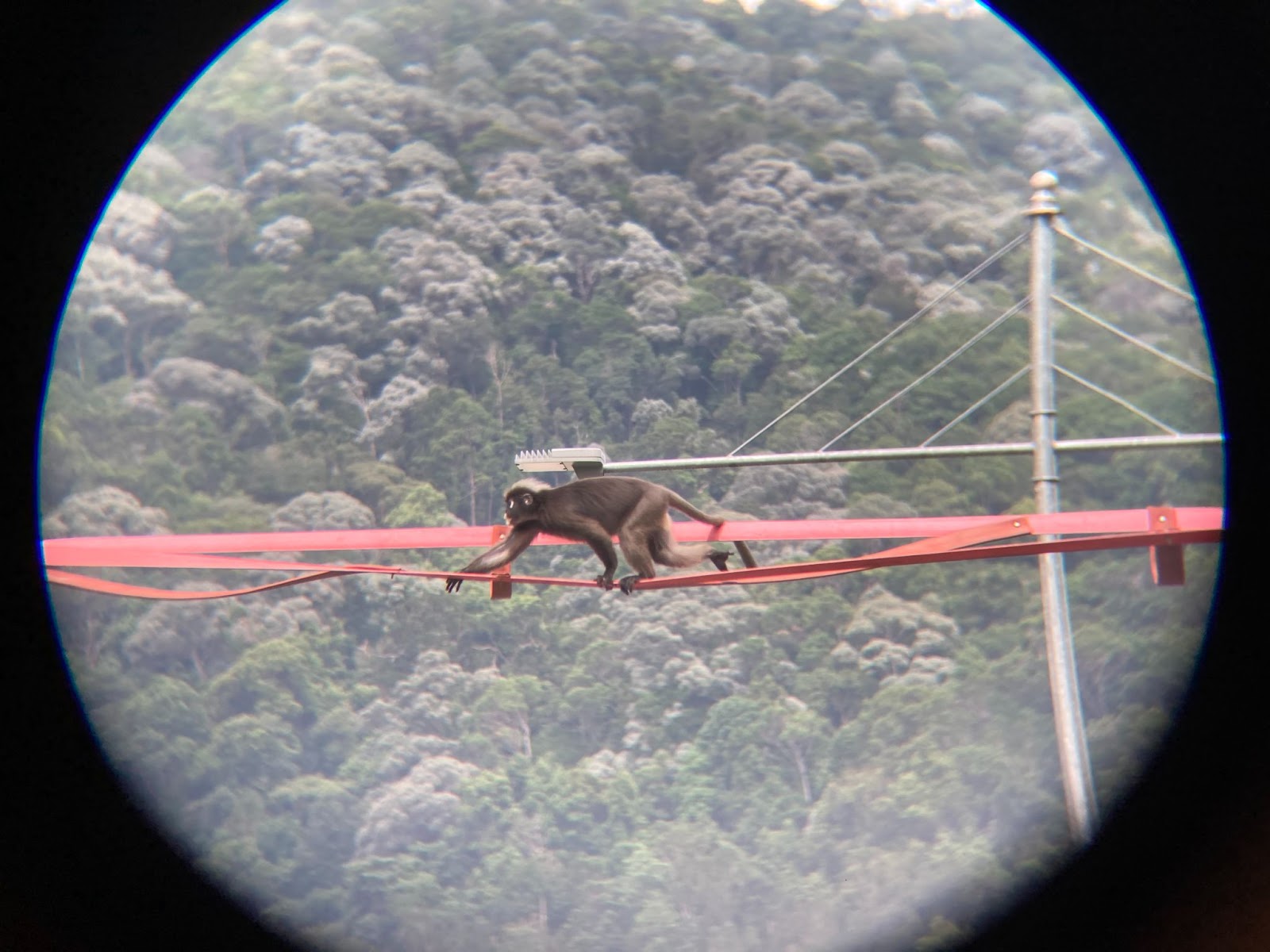
Numi’s family frequently uses the road canopy bridge to safely cross the busy road that connects the two buffer zones.
Read Joey’s ‘From Monkeys to Mindsets: A Growth-filled Life Chapter with Langur Project Penang’ – Chapter 3 here
 Langur Project Penang (LPP)