CHAPTER 1: SUNBEAM
7:00 a.m.
As I open my eyes, I see the sun rising from the horizon. Today, the weather is quite sunny, and I am feeling really hungry!!! It is now time for me to start my day.
*Male honking*
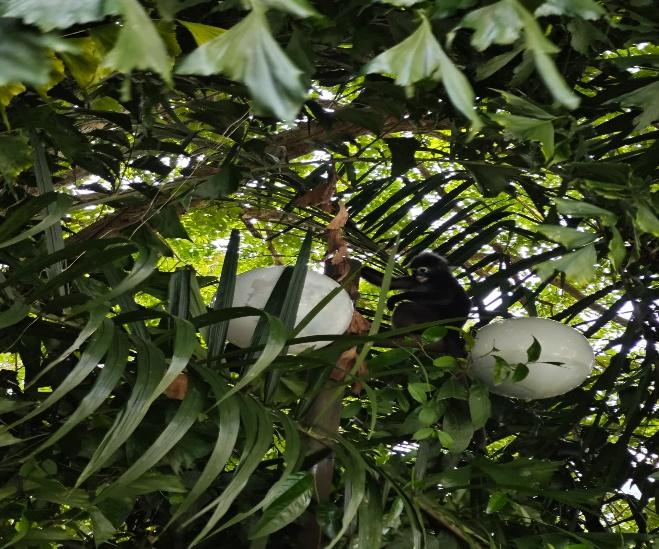
I wake my family members up and we start foraging for food. As we start feeding on the young leaves, two humans have come to stalk us.
They would usually be here from 7 in the morning to 12 in the afternoon, looking through their black equipment and observing our movements. Since it has become a routine for them, we got used to it too and decided to just ignore them as they pose no threat.
7:15 a.m.
The humans have started their routine, as we would call it, scanning. At first, we thought that they were crazy as they had to record our daily activities every 15 minutes.
For instance, some of us might be climbing, feeding, or playing. We would hear them muttering out phrases like, “Male, feeding on young leaves, positioning, sitting, stratum 1, nature, rain tree.”
Our detailed movements have been captured and collected for what purpose? Well you see, these humans are considered good humans as they really help us out a great deal.
CHAPTER 2: STORY TIME
7:45 a.m.

We continue to feed on young leaves and fruits around the area. Leaping from tree to tree, we have now progressed towards our favourite Rain Tree, which provides us shade from the sun. Furthermore, the cool weather today and our breakfast are making us sleepy.
Koko, our most active infant monkey, clings to his mother and goes to sleep. Most of us are laying down on tree branches, slowly dozing off to have our first nap of the day. During this time, let me tell you a story about these humans who come to visit us every morning.
These humans are also known as citizen scientists who help to conserve our species, the Dusky Langurs (Trachypithecus obscurus), and foster a peaceful coexistence between us and humans. You see, long before man-made infrastructure was built in this area, we used to live in the forest, enjoying our carefree daily routines. However, habitat fragmentation forced us out of our natural habitat and into the forest edges due to the construction of new hotels and restaurants in Penang.
The humans were everywhere —noisy, bustling, and strange. They pointed at us, their eyes filled with wonder and sometimes with fear. We do not want to bother them. In fact, we tend to avoid them.
However, encounters with humans are inevitable, as our habitat and food availability are dwindling nowadays. Furthermore, there are some infants and juveniles in our group who are still young and naive. They are very curious towards this human-impacted world. Some of their playful behaviours make people think we are friendly, but in fact, when our children grow up, they will definitely grow wilder.
Sometimes, we may find food plants near humans’ homes, water sources in human-made fountains, and cooling shelters in their gardens, which can fulfill our needs. However, it is not the same as the wide variety of plants and fruits available in our forest.
When we share space with humans, negative interactions between us may happen. Some humans set traps, hoping to catch us. Others throw stones or use sticks to chase us away. We learned to be quick and cautious, trying to avoid any interactions with the humans, but the tension between us and the humans only grew.
Chapter 3: The Accident
One day, one of my family members, Randall, ventured too close to the road. As we were looking for tree connectivity to cross the newly built road, he decided to use the road to get to his destination. We called out to him, warning him to stay back, but he didn’t listen.
All we could hear was the sounds of engines, and before we could react, a speeding vehicle struck him. The world seemed to freeze as we watched in horror. Blood can be seen flowing out from his body, with his small body broken. The humans gathered, some looking shocked, others indifferent.
We mourned him deeply. His life was a stark reminder of the dangers we faced in this human-impacted world. We have to always be cautious of anthropogenic threats. The forest had its predators, but the human world had its own perils — those we were not prepared for.
Chapter 4: The Aid in Blue
Despite the challenges, we tried to adapt to our new lifestyle. However, we need to rely on the residents’ food plants due to the lack of options in urban areas, which may create tension between us and some humans. We tried to avoid the housing areas so that we wouldn’t disturb the daily lives of others, but sometimes we are forced to use cable wires and rooftops to go from one tree to another due to a lack of natural corridors and green connectivity.

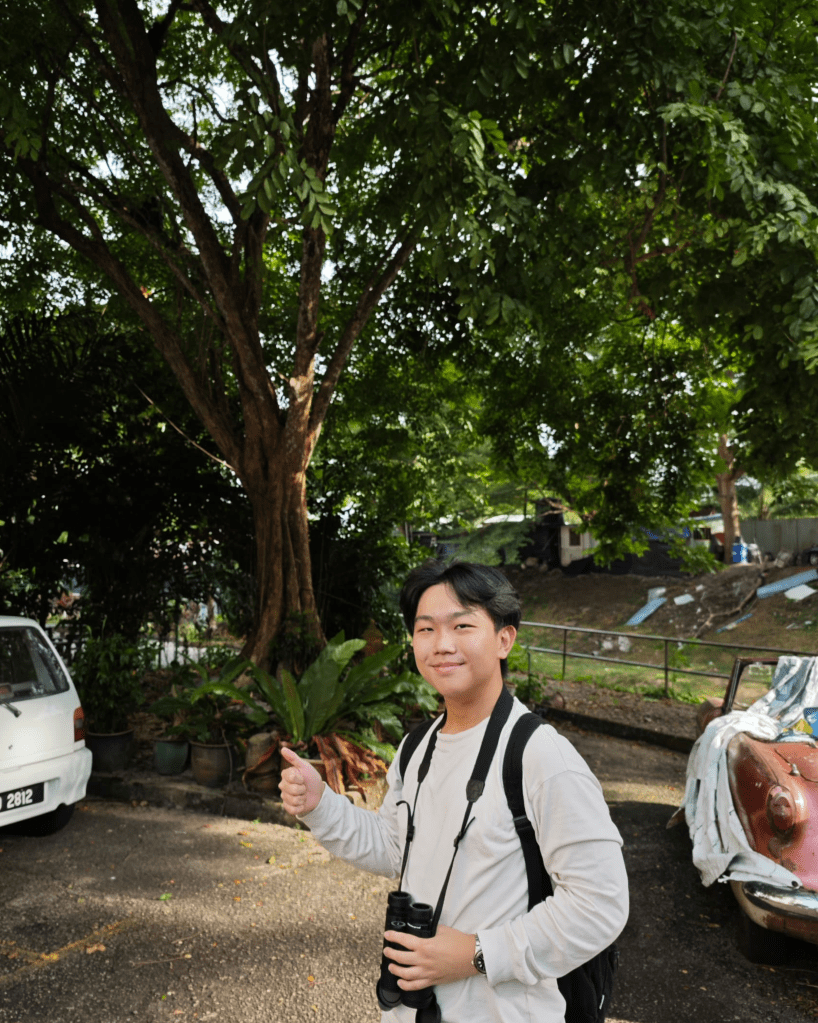
As the issue gets worse, a glimpse of hope appears right in front of us. Two humans dressed in green with the wording “Langur Project Penang” written on their T-shirts came to our aid. At first, we were afraid of their presence, as we thought that they wanted to capture us. As time went on, we realised that they were here to help us. They would record our daily activities every 15 minutes and take photos on their Wikiloc app. This allows them to understand our behaviour and travel routes throughout the day to conserve us.
These humans in green shirts come almost every morning from 7 am to 12 pm, carrying their black binoculars and observing us throughout the entire morning. They would also educate residents around the area about monkey guarding techniques, which are humane and effective in creating invisible boundaries between us to stay away and help guard my playful children from crossing human boundaries.
Furthermore, the residents were also told to attack us or stare at us to prevent any negative interactions from happening. This has been really effective and we are slowly adapting to this new way of living whereby humans do not interfere with our daily activities and we do not interfere with theirs.
Chapter 5: A New Beginning
After a few months of collecting our daily activity data, home range, and road crossing hotspots, Langur Project Penang built a road canopy bridge for us to cross the road safely and reduce roadkill incidents. A sign board was also installed to signal oncoming traffic about the bridge, reminding them to slow down their vehicles.
To this day, we are really grateful for the efforts of LPP. They are really important in helping us coexist with humans. Due to the development of land, habitat loss is inevitable for us Langurs and our wildlife friends in the forest, and through time, only more of us will be displaced from our homes and are required to share spaces with humans. LPP’s efforts still continue to this very day, studying the dusky langurs and engaging with the local communities to help us have a peaceful future with humans.
Next Morning

Ah, it’s time for my troops to wake up and continue foraging for more leaves. My story ends here, and I hope you can understand and forgive our actions, which may have brought you trouble.
We continued to navigate from tree to tree, exploring our beautiful home range by the sea. The two humans are still following us, pointing their binoculars at us every 15 minutes. We looked at them a couple of times and appreciated the help they provided us. This will continue for 3 more hours until they end their fieldwork for the day.
And so, our story continues—a tale of survival, adaptation, and hope.
We are the dusky langurs, and we hope to coexist better with humans.
Written by,
Dusky JingRen, 19 years old
 Langur Project Penang (LPP)