The misunderstood macaques
The long-tailed macaque (Macaca fascicularis) was recently elevated to Endangered status on the International Union for Conservation of Nature (IUCN) Red List of Threatened Species in 2022.
You may be wondering, “Why are the long-tailed macaques endangered? I see large groups of macaques in urban areas, gardens, and parks.”

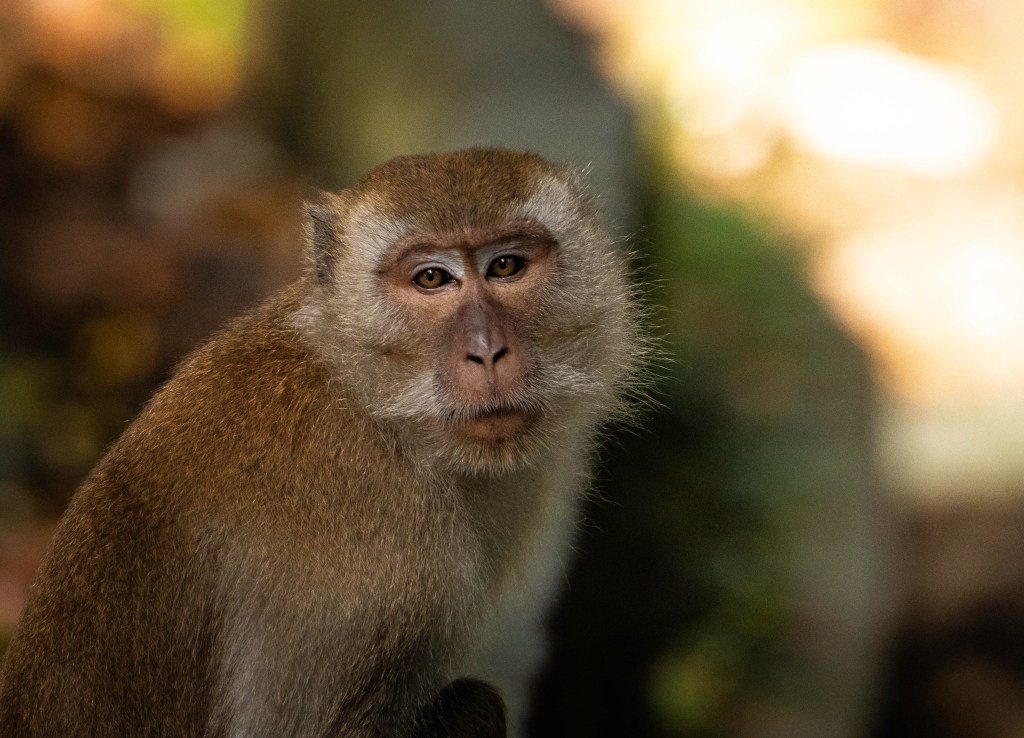
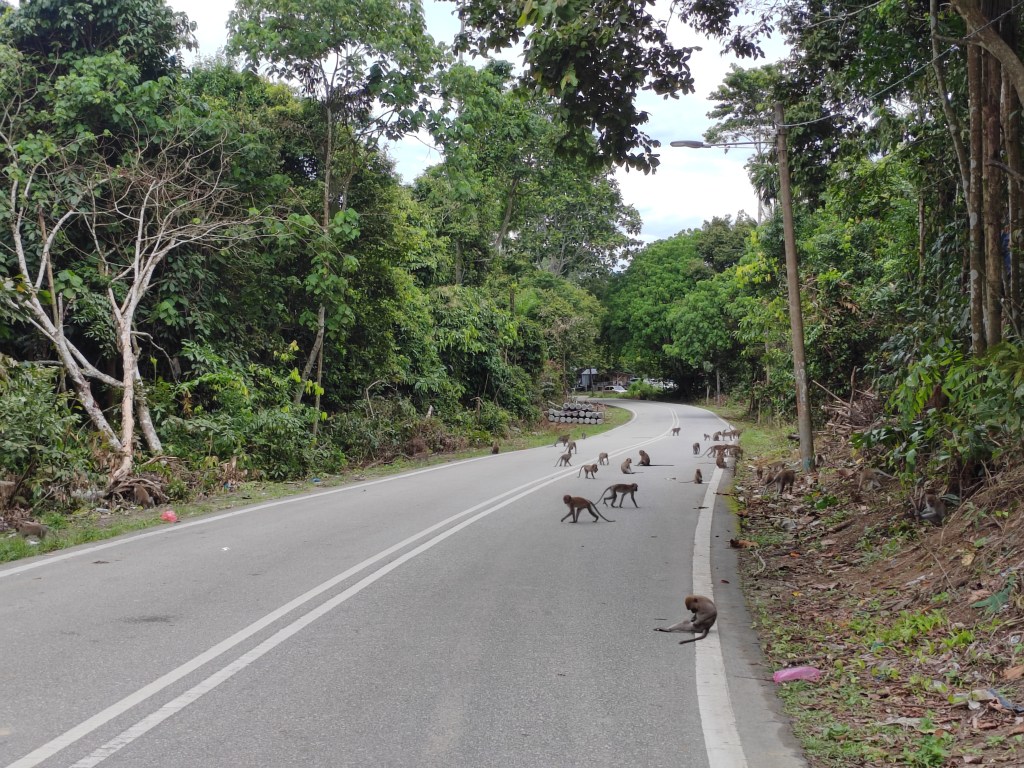
Photo above: Long-tailed macaques often spend more time on the ground at the edges of their habitats, where they are fed by humans.
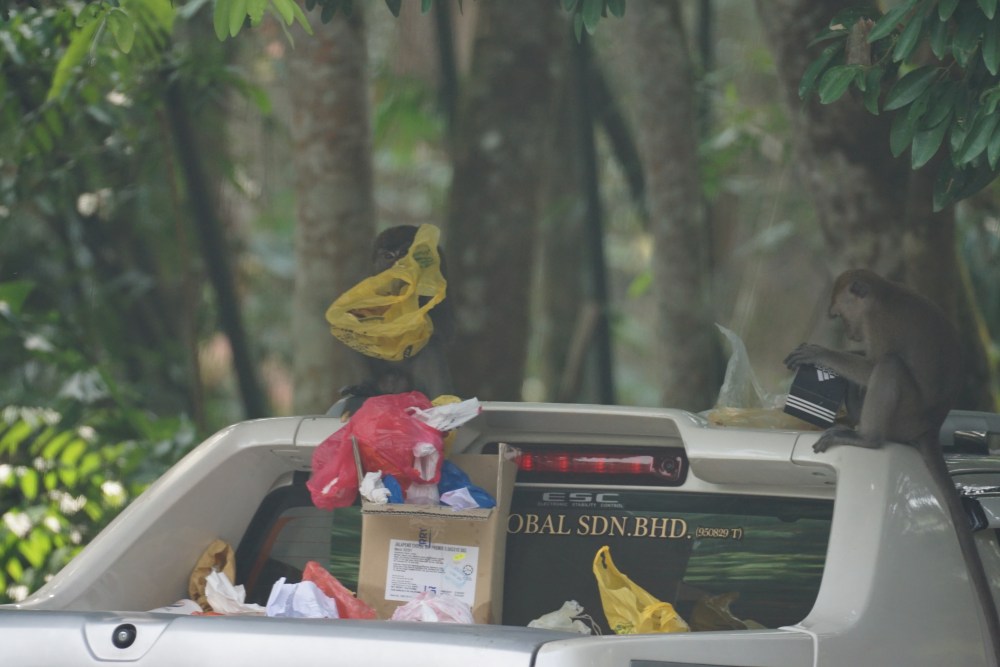
Photo above: Long-tailed macaques are often seen raiding crops and rubbish bins in urban areas, where they are often seen as a nuisance. This can be prevented through proper management, such as waste management and buffer zone enrichment in orchards.
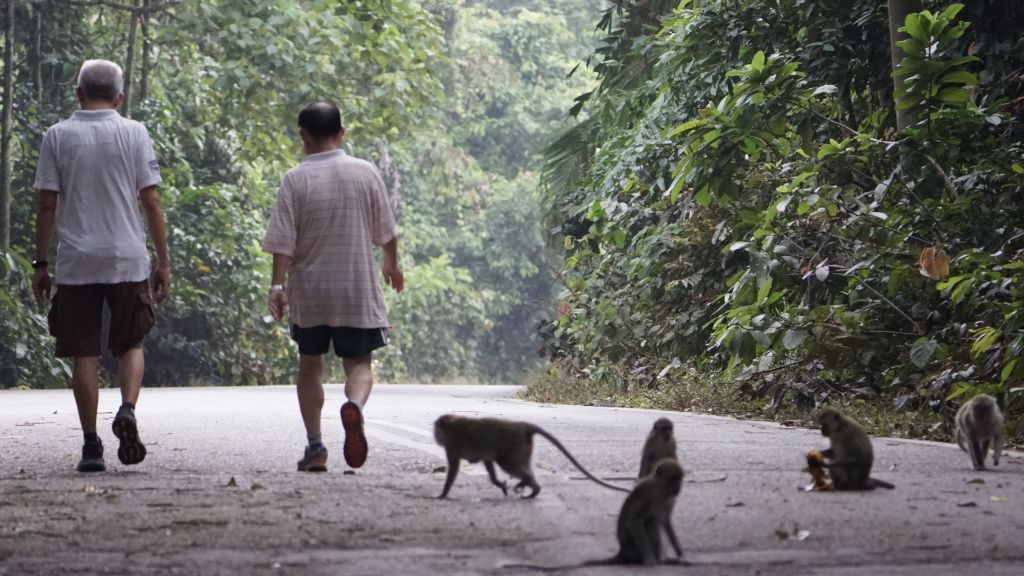
Photo above: People often see long-tailed macaques sitting in the middle of a hiking trail, which can cause fear and discomfort, especially in children. It is important to understand how to interact with macaques safely, and to be aware of their body language to avoid negative interactions.
The truth is, that the long-tailed macaque is threatened by multiple factors, including (Gamalo et al., 2023) :
- Declining native habitats across Southeast Asia
- Overutilization for scientific, commercial, and recreational purposes
- Inadequate regulatory mechanisms
- Culling due to human-macaque conflict
Seeing the monkeys near our human settlement areas is a sign of deforestation, habitat fragmentation, and the practice of humans feeding monkeys, which directly influences the behaviour, home range, and distribution of the macaques.
We frequently receive news and updates from the community regarding negative human-macaque interactions in Malaysia.
“Monkeys are feeding on my rambutan tree!”
“My rubbish bin got flipped over by the brown monkeys ler!”
“The macaques were trying to attack me when I tried to feed them!”
“Can you translocate the monkeys ah? Put in another place only ma”
As our cities and townships expand and encroach on natural habitats, it is inevitable that we will encounter more wildlife in our residential areas. This can lead to tensions between humans and animals, as we compete for the same space and resources.
While some people may enjoy the presence of monkeys near their homes, others find it unpleasant and intrusive. Many people are unaware of the importance of keeping a safe distance from urban monkeys, and their curiosity and false kindness can lead them to approach and feed these animals.
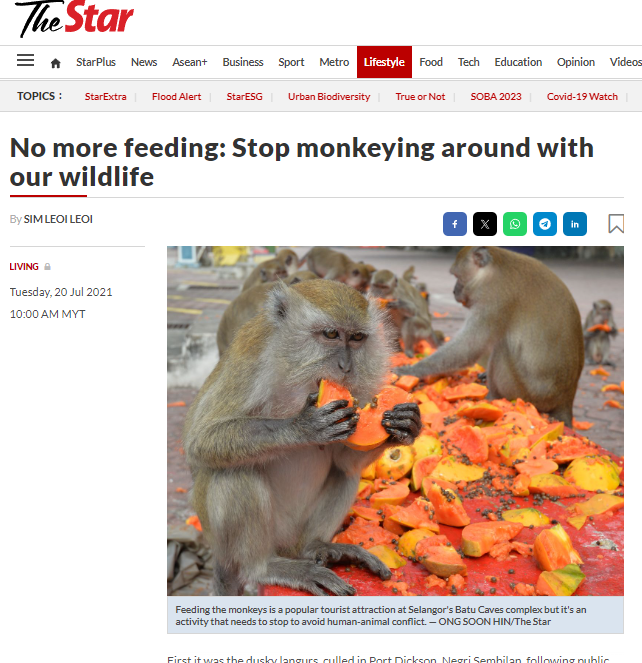
Feeding monkeys can cause health problems for the monkeys, increase pollution and disease transmission, and make them more vulnerable to the illegal pet trade. It can also lead to conflict between humans and monkeys, and make monkeys lose their ability to find food for themselves. Read more about why we shouldn’t feed monkeys here.
The increasing amount of negative human-macaque interaction complaints from residents all over Peninsula Malaysia towards the Wildlife Department has directly contributed to the high number of long-tailed macaque culling cases. In fact, between the years 2010 to 2021, an average of 72,500 long-tailed macaques were culled per year in Peninsula Malaysia.
The current situation and status of the long-tailed macaques is alarming. However, primatologists and conservationists from all over the world are doing their best to help the macaques through research, education, and positively influencing global legislation and the welfare of the macaques.
There are also many things we can do on the ground to help our family, friends, and community to understand the macaques a little bit better. By fostering a positive perception of the macaques, we can help to create a more harmonious coexistence between humans and these amazing creatures.
Here are some things we can all do to help:
- Educate ourselves and others about the long-tailed macaques and their importance to the ecosystem.
- Avoid feeding wild macaques. This can lead to them becoming aggressive towards humans and other macaques.
- Dispose of our trash properly to prevent macaques from foraging for food in human settlements.
- Support organisations that are working to protect and conserve long-tailed macaques in Malaysia: the LTM Project, Animal Neighbours Project, Malaysian Primatological Society
By working together, we can help to create a better future for the long-tailed macaques and for ourselves.
Community engagement and Environmental Education to nurture positive human-macaque interaction
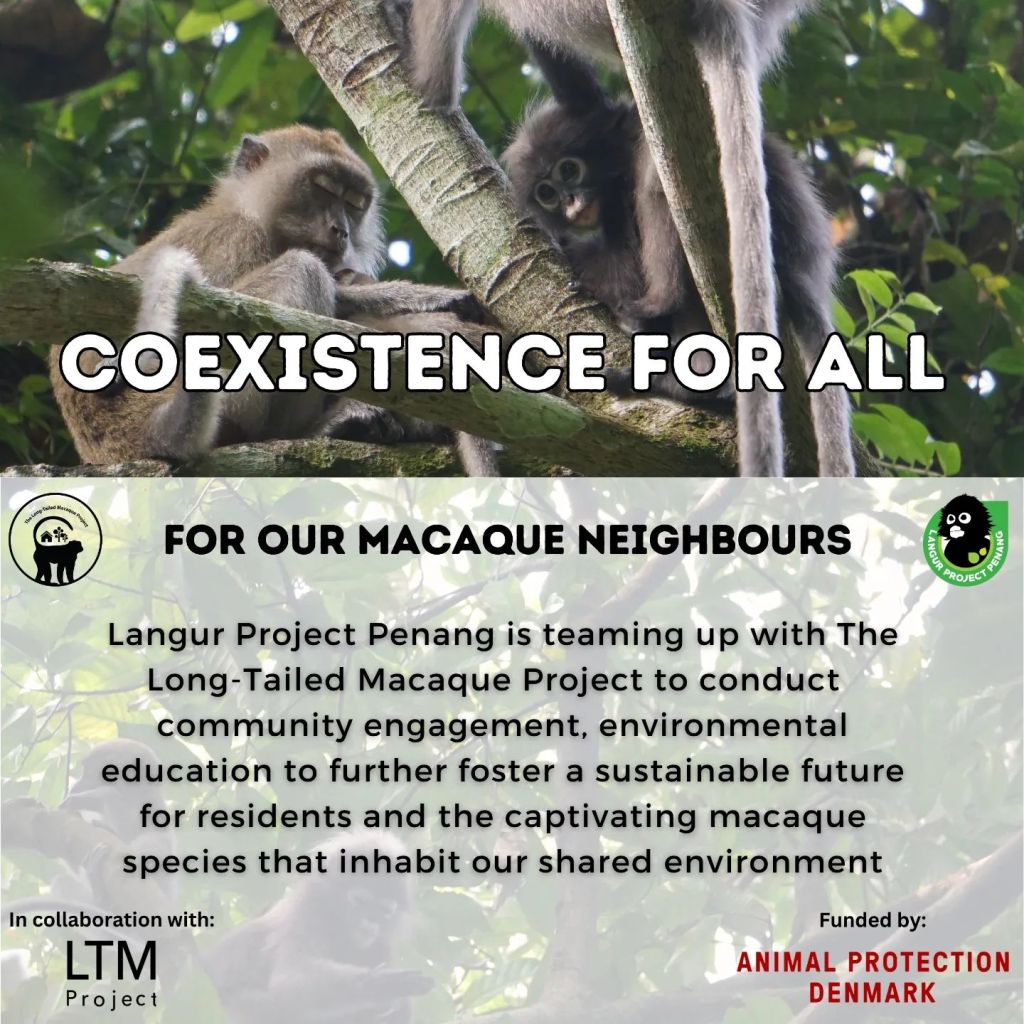
In August 2023, Langur Project Penang joined forces with the Long-Tailed Macaque (LTM) Project to launch a new initiative called Coexistence for All. This project aims to foster a harmonious relationship between humans and long-tailed macaques in Penang, Malaysia through community engagement and environmental education.
We aim to tackle human feeding monkey issues, and poor waste management, and to enhance public understanding toward human-macaque interaction through education programmes, interviews, behavioural study of macaque species and to work with the community to develop a management plan and recommendations for potential humane and sustainable approaches to mitigate negative human-primate interactions in Penang.
Why is this project important?
The Coexistence for All project will address these challenges through a variety of activities, including:
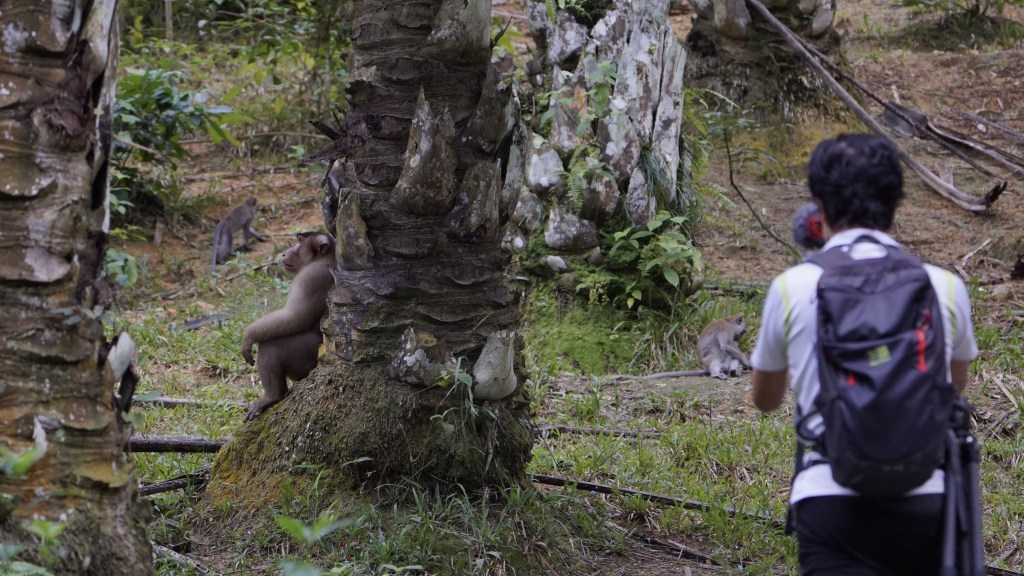
- Conducting macaque behaviour observation and community engagement with residents in critical long-tailed macaque habitat neighborhoods in Penang.
- Creating social media educational content and organising environmental education activities to cultivate coexistence between humans and the long-tailed macaques.
- Working with community representatives and stakeholders to address the impacts of feeding monkeys.
The project is funded by Animal Protection Denmark, and it is supported by the LTM Project, Forestry Department Penang, and Pusat Khidmat Masyarakat ADUN Machang Bubuk, Bukit Mertajam.
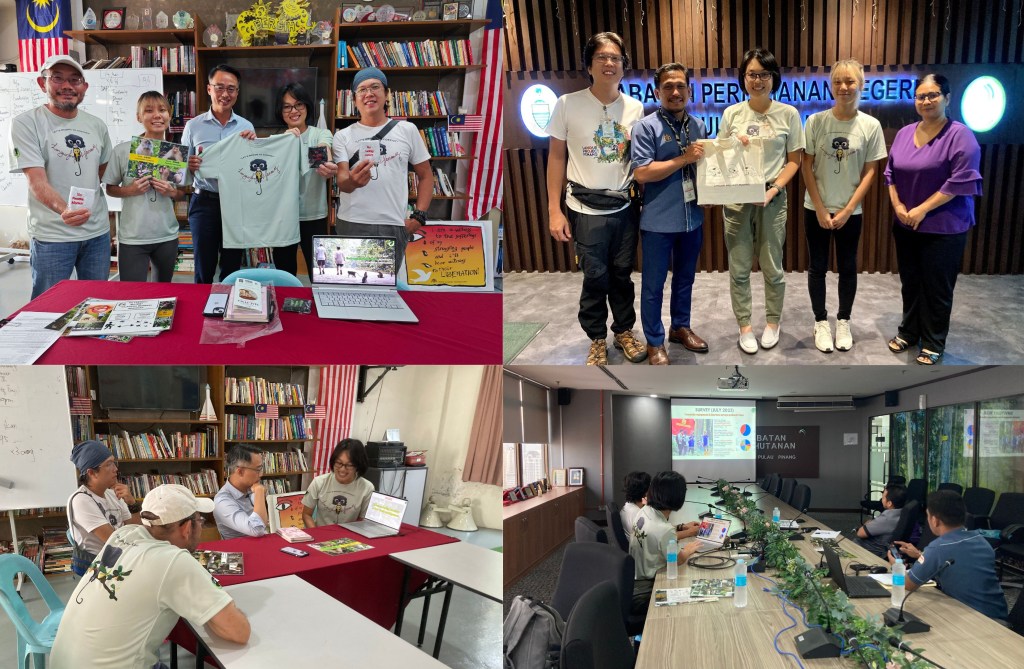
Long-tailed macaques are a charismatic and intelligent species, and they play an important role in the Malaysian ecosystem. Also, they are extremely social too! However, they are also facing many threats, and they are often misunderstood by the public.
The Coexistence for All project aims to change this. By educating the public about long-tailed macaques and the importance of coexistence, the project will help to create a more harmonious relationship between humans and these amazing creatures.
The Social Long-tailed Macaques
Long-tailed macaques are playful and intelligent creatures. They also form cooperative bonds with their relatives, the pig-tailed macaques (bottom left).

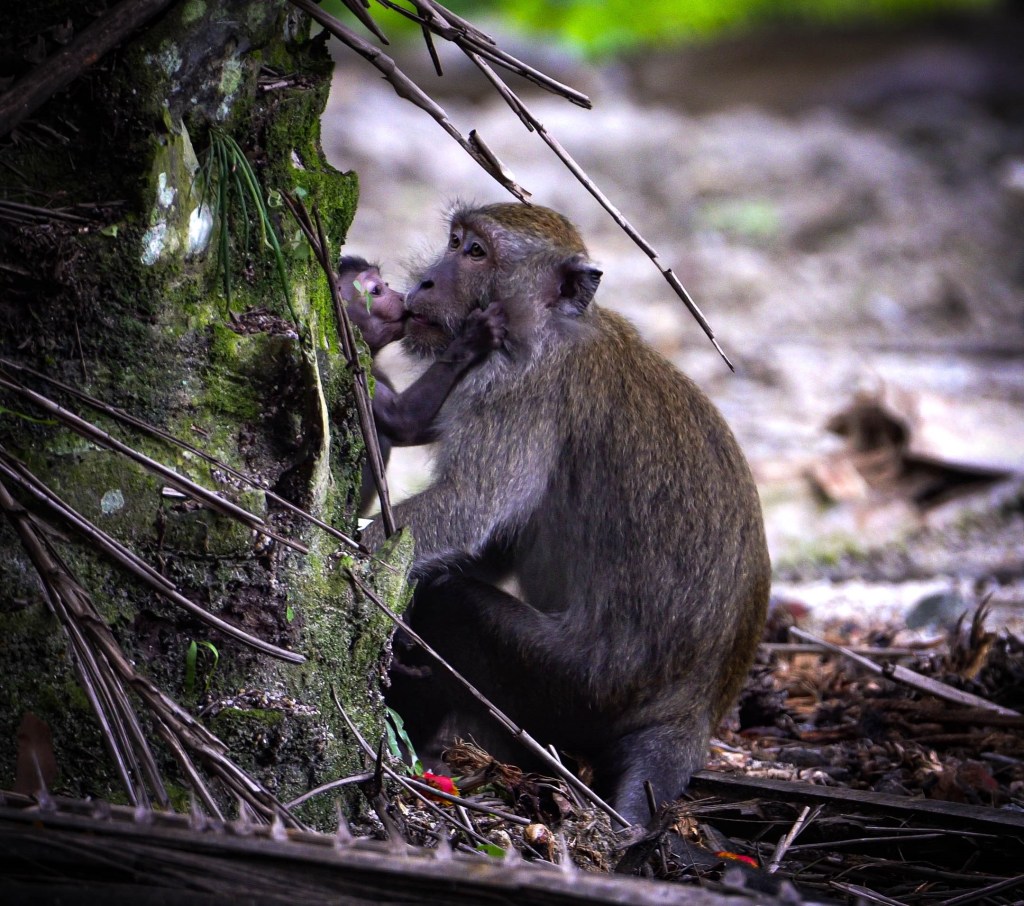

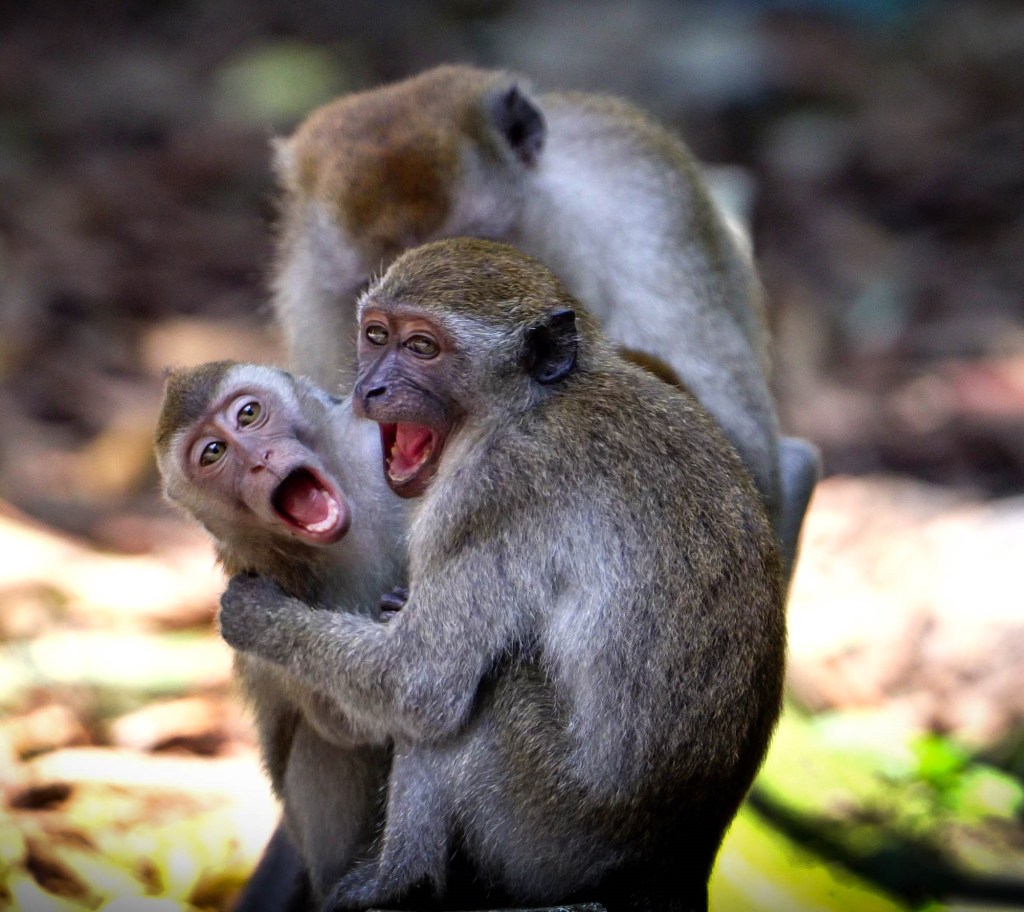
WHAT’S YOUR FAVOURITE MACAQUE MOMENT?
All photos are courtesy of Langur Project Penang.
How can you get involved?
There are many ways to get involved in the Coexistence for All project. You can:
- Follow Langur Project Penang and the LTM Project on social media to learn more about the project and its activities.
- Participate in the project’s community engagement activities.
- Share educational content about long-tailed macaques on your own social media channels.
- Donate to Langur Project Penang or the LTM Project to support their work.
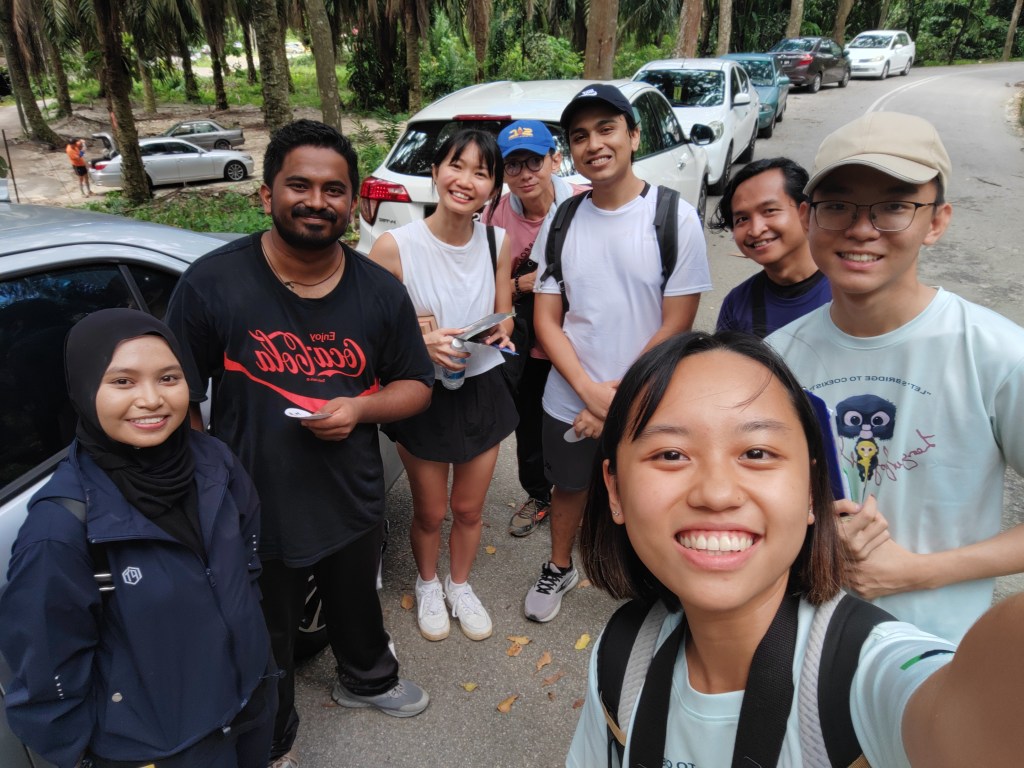
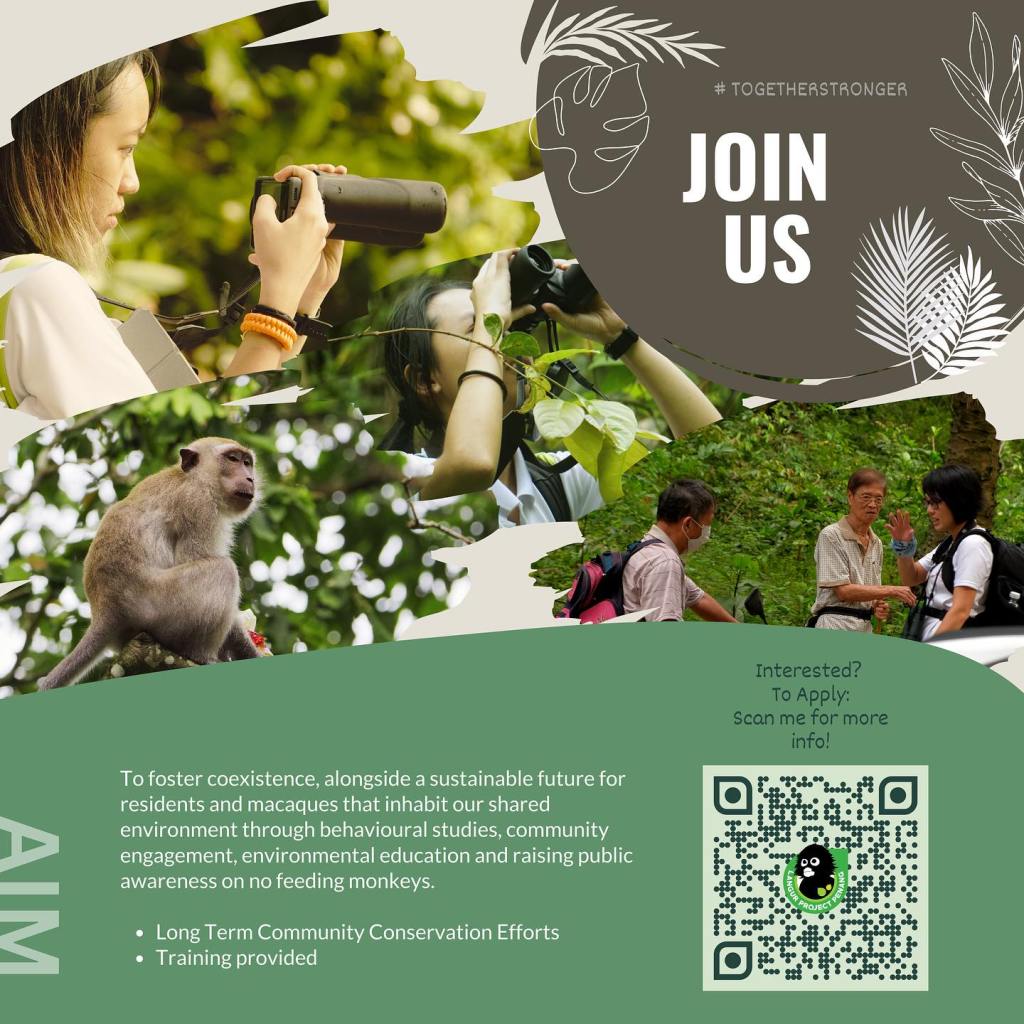
You can join the Coexistence for All Project as a Citizen Scientist Volunteer!
Citizen scientists are passionate individuals who volunteer their time and skills to help scientists with their research. Here are just a few of the ways that you can make a difference as a citizen scientist volunteer:
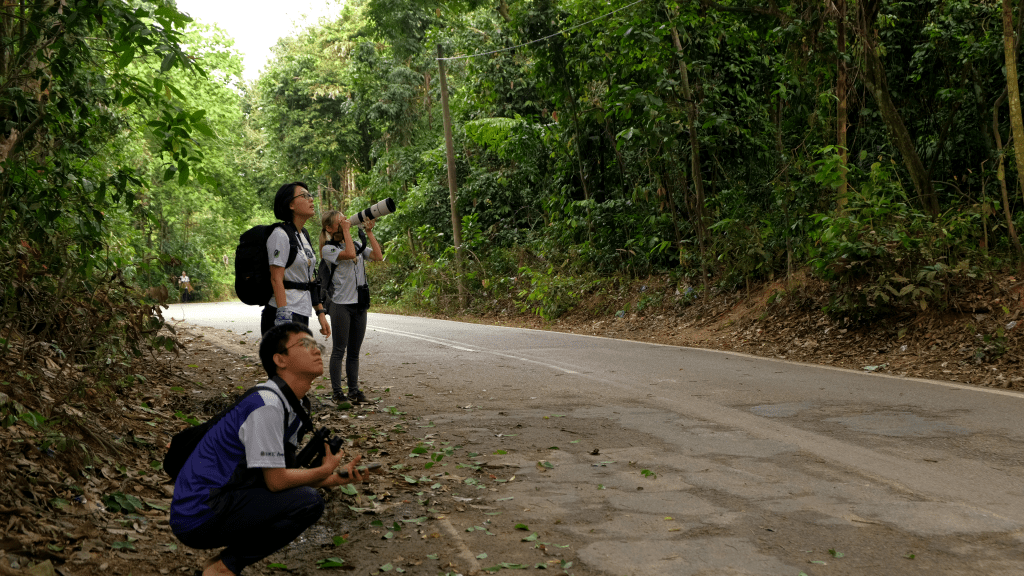
- Help us to monitor macaque populations and collect data on their behaviour and ecology.
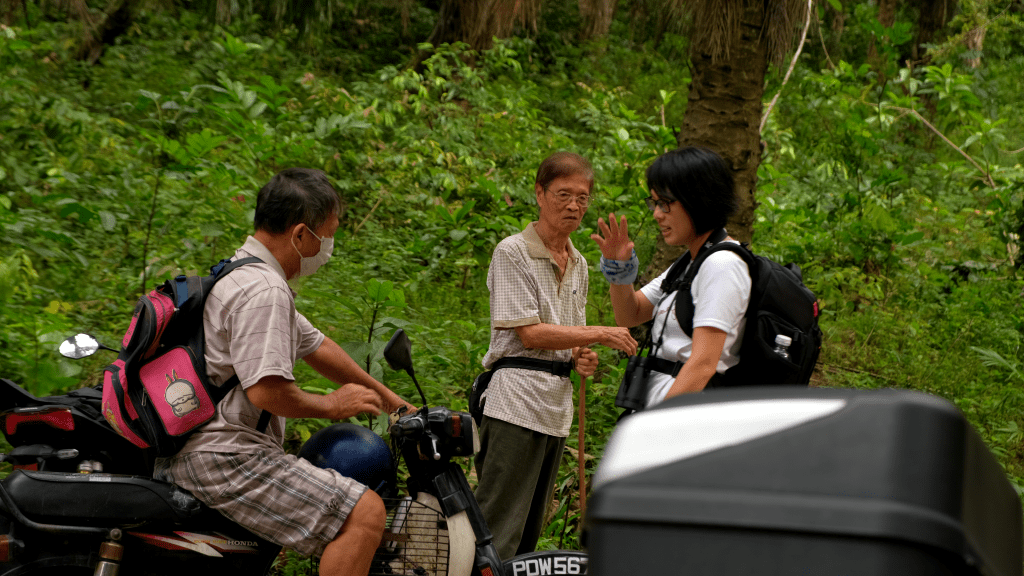
- Engage with the community and conduct ethnography study with the locals to raise awareness about macaques and promote coexistence.
- Assist with the development and implementation of management and strategy plans to address human-macaque conflicts.
- Create and deliver educational materials and programmes to teach others about macaques and the importance of coexistence.
If you are interested in becoming a citizen scientist volunteer for the Coexistence for All project, please register through the link here. We look forward to hearing from you!
Ready to join our team of dedicated citizen scientists? Apply now and embark on a journey of discovery, impact, and connection.

If you have any questions, please contact us at info@langurprojectpenang.com or assist@langurprojectpenang.com
 Langur Project Penang (LPP)